Bio
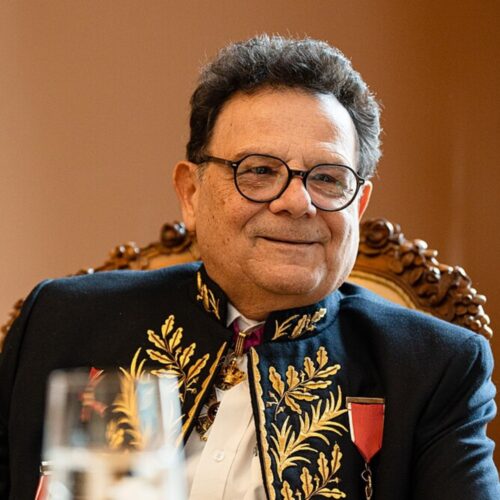
Born in Munich, Germany, in 1946, Ernesto Pinto-Bazurco Rittler belongs to a Peruvian-German family with a distinguished humanitarian and cultural legacy. He is the son of the Peruvian physician Ernesto Pinto-Bazurco Alcalde, remembered for assisting Jewish families persecuted during the Second World War. His binational and multicultural upbringing shaped both his diplomatic career and his vision of international relations. Throughout more than five decades of diplomatic service, he has promoted dialogue, the peaceful settlement of disputes, and the defense of international law.
His diplomatic assignments encompassed complex international political environments during both the Cold War and the post-Cold War period, including multilateral work within the United Nations system and diplomatic postings, Europe and Asia.
His experience in Cuba in 1980 remains one of the most memorable episodes of contemporary Peruvian diplomacy. His book Diplomacy for Freedom documents his most remarkable diplomatic efforts in handling the humanitarian crisis during his posting in Cuba. In recognition of his contribution, during what is now known as Marie Boatlift episode, he received the Palmer Award and was nominated for the Nobel Peace Prize in 2016.
He has served as a university professor at the University of Lima, where he taught courses on International Law and Multilateral Diplomacy.
He has also developed a literary body of work focused on historical novels and contemporary themes. His novel Our Constant Struggle and Isabel of the Seas, inspired by Isabel Barreto, widely regarded as the first woman admiral in history, are most prominent.
He is at present a Senior Advisor to the Minister of Foreign Affairs of Peru.
Book Gallery